
"Every child deserves the chance to discover stories. Every young person deserves to believe that one day, their own story is worth telling."
Sometimes the most meaningful projects don’t begin in boardrooms or strategy meetings. Sometimes they begin around a campfire.
Earlier this year, while camping with our toddlers, our dear friend Tania Kliphuis and us, we found ourselves talking about the work The Empathologist Foundation had begun with adolescents in Delft. Tania is not only a close friend, an avid reader and a writer, but at the time she had also started her new role at the Otto Foundation. As our children played nearby and the conversation unfolded, one question kept returning to us:
What if we could build a reading club that truly belonged to the girls themselves?
Not another programme designed by adults. Not another activity where young people simply participated. But a space they could shape, nurture and proudly call their own. That quiet conversation in nature became the spark that ignited everything that followed.
Soon afterwards, we met at The Empathologist Foundation’s offices in Cape Town to begin imagining what this dream could become. Ideas flowed freely. Books were discussed. Activities were imagined. Questions were asked. We spoke about community, belonging, imagination and confidence.
When like-minded people come together around a shared purpose, ideas have a remarkable way of finding one another. That afternoon, Dream Readers was born, long before it ever had a name.
Building a Reading Community Before Building a Reading Club
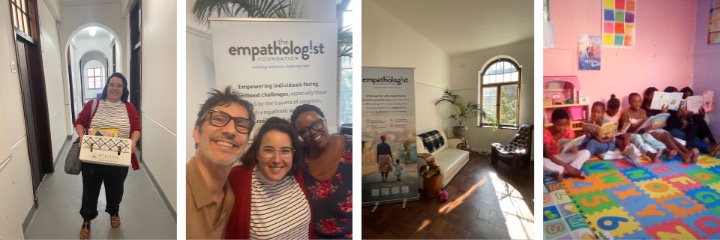
One of the principles that guides all our work at The Empathologist Foundation is simple: Communities should not merely participate in projects. They should help create them.
Before inviting the girls to Cape Town, we first shared the idea with Paballo Sefotha, community leader of The Voice of an Angel Baby Nursery & Girls Club House in Delft.
Earlier in the year, The Empathologist Foundation had worked alongside the community to establish this welcoming space where children and adolescents could learn, play and simply feel safe. Paballo had already become a trusted presence in many young people’s lives, making her the ideal partner to nurture this new initiative from within the community itself.
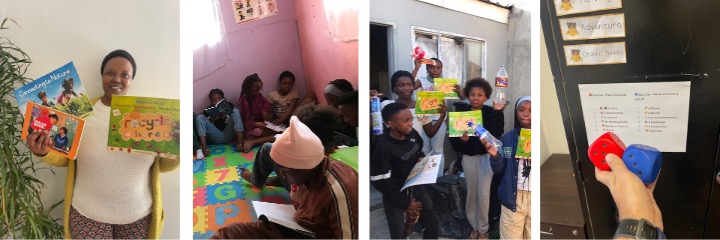
Rather than waiting for formal sessions to begin, we provided Paballo with a collection of books and invited the girls simply to read. No pressure. No assignments. No tests. Just stories.
Very quickly something became clear. These girls loved reading. They laughed together over stories. They recommended books to one another. They discussed characters and endings. Long before there was a formal reading club, a reading community had already begun to grow.
That reminded us of something important: Sometimes people don’t need motivation. They simply need opportunity.
Creating Dream Readers Together

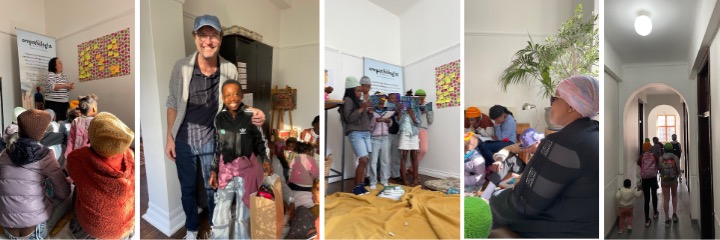
When the girls travelled to our offices for the first official session, they weren’t arriving to join a reading club. They were arriving to create one.
Beforehand, Paballo had encouraged them to think about names, values and ideas for the club. We deliberately avoided making those decisions ourselves because ownership matters.
If Dream Readers was going to flourish, it had to belong to those who would bring it to life.
Together, they chose the name. Dream Readers.
It couldn’t have been more appropriate. Because reading has always been about more than words on a page. Reading allows us to imagine different futures.It teaches empathy. It expands possibilities. It reminds us that our circumstances do not define the limits of our dreams. The girls then created something even more important than a name. They created the values that would guide every session.
Their own Code of Conduct.
- Love each other.
- Respect one another.
- Don’t laugh at each other.
- Help each other.
- Have courage.
- No bullying.
- No gossip.
- Be friends.
- Work as a team.
- Be committed.
No adult wrote those rules. The girls did. And throughout the following 4 months, those principles quietly shaped every discussion, every activity and every friendship that developed around Dream Readers.

Reading Begins Long Before Someone Opens a Book

When people hear about a reading club, they often imagine shelves of books, quiet rooms and children sitting comfortably reading. Reality looks different.
Especially in communities where daily life presents challenges that many people never have to think about. We quickly realised that if we truly wanted to encourage reading for pleasure, we first needed to remove the barriers that stood in its way.
Every three weeks, fourteen girls travelled from Delft into Cape Town. Transport had to be organised. Drivers coordinated. Times confirmed. Sometimes carers travelled too. Occasionally toddlers joined us. Every detail mattered.
Then came another question.
What happens when they arrive?
We wanted them to walk into a space that immediately communicated something many had rarely experienced outside their own community:
You belong here.
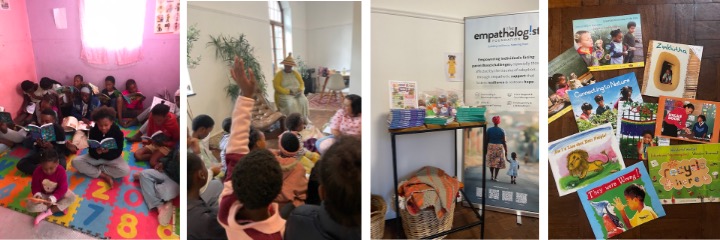
So we thought carefully about every detail. Would they be hungry? Would there be enough food? Would everyone have something warm to drink? Would there be comfortable places to sit together? Could reading happen outside beneath the trees? Would there be opportunities simply to laugh? Blankets soon appeared for picnics in the park. Milk, fruit, sandwiches and snacks were shared around the table. Books travelled outdoors. Conversations drifted naturally between stories, dreams, friendships and life. Little by little, our office stopped feeling like an office. It became a place of belonging.
Listening Before Acting
One of the greatest lessons we learned throughout Dream Readers came not from books, but from listening.
As relationships deepened, the girls began telling us more about their daily lives. Many lived in busy households. Some shared bedrooms with several family members. Quiet moments were rare. People came and went. Finding uninterrupted time to read was often almost impossible. It would have been easy simply to encourage them to read more. Instead, we asked ourselves a different question.
How can we help make reading possible?
That simple shift changed everything.
The girls each received a pair of earplugs. Such a small gift. Yet behind it lay a profound message.
“Your reading matters enough for us to think about where and how you read.”
It wasn’t about earplugs. It was about dignity. It was about understanding that literacy is shaped by environment as much as motivation.
Every Gift Told a Story
Dream Readers was made possible through extraordinary collaboration.
The Otto Foundation generously helped us build the foundation of our growing library.
ERLU expanded our collection with additional books that opened new worlds for the girls.
The beautifully handcrafted Read Buddies, crocheted companions purchased specifically for the programme, became far more than soft toys. Each girl took one home. Each Reading Buddy quietly accompanied moments of reading, especially during those evenings when they found themselves alone with a book. It was a reminder that even when reading happened individually, they remained part of a community.
During the school holidays, a netball encouraged movement, laughter and friendships beyond the pages of books.
Meanwhile, through the generosity of Debbie Gerhardt, Star Light Media, the Star Baby Competition, and Red Fox Group, each participant received beautiful bags filled with notebooks, pencils and other learning materials.
None of these gifts were random. Each one reflected the same belief.
We believe in your future.
Perhaps that is one of the most important lessons Dream Readers has taught us. Supporting literacy isn’t only about providing books. It is about creating the conditions in which books can become part of everyday life.
Cape Town Became Part of the Classroom
There was another reason we wanted the girls to leave Delft and travel into Cape Town. It had very little to do with our office. It had everything to do with possibility.
Too often, cities become invisible boundaries. Young people grow up believing that certain places belong to other people. That museums are for tourists. That libraries are for students elsewhere. That parks are somewhere you pass through rather than somewhere you belong.
We wanted Dream Readers to gently challenge that idea. Travelling together. Walking through the city. Reading beneath the trees. Watching squirrels run through the park. Sharing picnics. Discovering new places. All of these became part of the learning experience. Because books inspire imagination. But so do cities.
And every young person deserves to feel that Cape Town belongs to them just as much as anyone else.
What Changed?
At the end of the programme, we asked the girls to reflect honestly on their experiences. The results were deeply encouraging.
Of the fourteen participants, eleven gave the highest possible score when asked whether they now felt more confident reading, while the remaining three scored four out of five.
Not one participant reported low confidence. Enjoyment of reading also changed dramatically.
Before joining Dream Readers, enthusiasm for reading varied considerably. By the end of the programme, every participant reported enjoying reading more, with every response scoring either four or five out of five.
Most also reported reading more frequently, one of the strongest predictors of literacy development. Almost every participant believed that their own reading had improved. Perhaps even more importantly, they recognised that progress themselves.
One of the highest-rated questions asked whether Dream Readers had become a place where they felt safe, welcome and respected. Twelve of the thirteen girls who answered awarded the highest possible score. The remaining participant scored four out of five.
For us, that result speaks volumes.
Dream Readers became much more than a literacy programme. It became a safe space.
The Reading Buddies themselves also made a measurable difference. The girls consistently described how their crocheted companions made reading more enjoyable, helped them feel supported and increased their confidence while reading at home.
The trips into Cape Town also emerged as some of their strongest memories. Reading outdoors. Visiting the park. Seeing squirrels. Travelling together. Sharing picnics.
Learning became associated not with pressure, but with joy.
Perhaps the most inspiring result came when we asked whether Dream Readers had helped them believe books could create new possibilities for their future. Thirteen of the fourteen girls gave the highest possible score. The remaining participant scored four.
That level of hope cannot easily be measured. Yet it may be one of the programme’s greatest achievements. Every single participant wanted Dream Readers to continue. Every single participant wanted to keep reading together. And then came the answer that surprised us most.
When asked whether they would join a writing club, thirteen answered yes.
One answered maybe.
Not a single participant answered no.
From Dream Readers to Dream Writers
Perhaps this is where the story truly begins.
When we first imagined Dream Readers, our ambition was simple. To help young people fall in love with reading. Today, that ambition feels wonderfully incomplete. Because something unexpected happened.
The girls no longer spoke only about the books they wanted to read. They began talking about the stories they wanted to write. That changes everything. It suggests that reading has become more than entertainment. More than education. It has become permission. Permission to imagine. Permission to create. Permission to believe that their own experiences deserve to be written down and shared.
Maybe that has always been the real purpose of literacy. Not simply to create readers.
But to nurture storytellers. To help young people realise that their lives, dreams, fears and hopes deserve a place in the world.
Perhaps Dream Readers has already begun becoming Dream Writers.
If that happens, then the books these girls read today may one day inspire books written by them, books that another generation of children will open and discover hope within.
The Story Continues
Dream Readers reminded us that literacy is never just about books. It is about relationships. It is about trust. It is about listening. It is about removing barriers that too often go unseen. It is about creating spaces where young people feel safe enough to be curious, brave enough to ask questions and confident enough to believe that their voices matter. To every one of the fourteen remarkable girls who welcomed us into this journey, thank you.
To Paballo Sefotha, whose unwavering leadership and care made this programme possible within her community, thank you.
To Tania Kliphuis, whose friendship, creativity and belief in this dream helped transform a conversation around a campsite into a thriving reading community, thank you.
To the Otto Foundation, ERLU, Read Buddies, Debbie Gerhardt, Star Light Media, the Star Baby Competition, Red Fox Group, and every individual who donated books, resources, time or encouragement, thank you.
You gave far more than books. You created opportunities. You created belonging. You reminded fourteen young women that they matter.
And perhaps, somewhere among those books, those picnics, those conversations and those journeys between Delft and Cape Town, the first chapter of another story has already begun.
A story that, one day, these young women may write themselves.
Get in Touch
If you have read this far and something has resonated with you, know that meaningful change is rarely created by a single organisation or individual. It is built through communities of people willing to share their time, skills, resources, networks, and compassion.
Whether you are an educator, a healthcare professional, a business owner, a mentor, a donor, a reader, or simply someone who believes that women deserve the opportunity not only to survive but to thrive and lead, there is a place for you in this journey.
Get in touch. Ask questions. Share ideas. Walk alongside us.
Because when women support women, when communities invest in their own strengths, and when we choose solidarity over indifference, we do not simply change individual lives.
We transform communities.
#CommunityDrivenChange #WomenSupportingWomen #GrassrootsLeadership #SocialHealth #CommunityCare #FemaleEmpowerment #CollectiveAgency #ReadingForPleasure #Delft #CapeTown #TheEmpathologistFoundation
IF YOU WANT TO KNOW MORE:
Facebook: https://www.facebook.com/The.Empathologist.Foundation/
Instagram: https://www.instagram.com/the.empathologist.foundation/
LinkedIn: https://www.linkedin.com/company/theempathologistfoundation/
Article in GoodThingsGuy: https://www.goodthingsguy.com/lifestyle/adoption-to-action-empathologist-foundation/
IF YOU WANT TO SUPPPORT:
Read one mother’s story and we hope you can support our BackaBuddy Campaign Walk With Her here:
👉 https://backabuddy.co.za/campaign/walk-with-her-birth-mothers-thriving

